Dr. Dr. Wilhelm Heinrich Lešovsky
19. Nov. 2026 / Science & Research
Wilhelm Lešovsky (1901–1976)—a versatile, adaptable, sensitive, and imaginative man, though not always systematically oriented—left a lasting legacy as a missionary, physician, educator, and psychiatrist that extended far beyond the boundaries of the Seventh-day Adventist Church. Often misunderstood and underappreciated by the Church, he spent his life striving for understanding and acceptance as a missionary “outsider” and individualist. He ultimately found recognition as a physician and psychiatrist at the university. In his heart, however, he remained a missionary, a profound expert on the Islamic world and the Quran, which he read and memorized in Arabic. Until the end of his life, Wilhelm Lešovsky remained in constant dialogue with his “sympathizers of Christ,” as he used to call his Muslim friends. Lešovsky was a pioneer for the Adventist mission to Islam—much like his friend and schoolmate from Friedensau, Erich W. Bethmann—who strove to develop a new, contextually oriented approach to mission education in dealing with Muslims.
Background, Education, and Missionary Work
Wilhelm H. Lešovsky was born in 1901 in Kranichsfeld near Marburg (Southern Styria, now Slovenia) and raised in the Lutheran faith. In 1915, he began military training and served in the Imperial and Royal Honor Guard, which accompanied the funeral procession of Emperor Franz Joseph I, who died in Vienna in 1916. Following a spiritual conversion, he joined the Adventists in Vienna in 1919. Under the influence of his friend Ferdinand Pieringer, who was a few years his senior (see “Rosette” [1999], No. 5) —Lešovsky remained a close friend throughout his life and gave him the nickname “Pi”—he moved to Friedensau, where he completed the ministerial training program and, encouraged by the school principal Wilhelm Mueller, first began to explore issues related to missionary work among Muslims. After taking “detours”—returning to Austria, dropping out of medical school, working as a teacher and dorm director in Friedensau, and serving as a youth pastor in Czechoslovakia—he followed his inner calling in 1929 and traveled to the Middle East as a missionary. He reported to the experienced but inflexible mission director Walter K. Ising, who, in keeping with the prevailing views of his time, regarded Islam as a religious “aberration,” pressed for quick results, and devoted little time to gaining a deeper understanding of the culture of the Arab world. Tensions and misunderstandings between the young, innovative missionary and his headstrong leader and superior made collaboration in the mission field difficult.
The Search for a New Missionary “Footing”
Lešovsky was initially sent to Damascus, where he lived on the outskirts of the city with “a window to the desert”—as he put it—and, through diligence and a gift for languages, acquired an astonishing command of classical Arabic, both spoken and written. He realized that access to the reserved desert population could only be gained through an interpersonal “bridge of trust,” which took a great deal of time to build through many laborious encounters, he found this trust in family counseling, kindergarten work, and elementary school teaching. These areas of focus helped him gradually win the hearts of the Bedouins. His wife, Charlotte Stark—an experienced educator and a student of Pestalozzi—stood firmly by his side throughout this process. In his search for a missionary “point of connection,” Lešovsky drew upon the natural theology of the Swiss theologian Emil Brunner, who posited that all people share a common knowledge of God, revealed through divine law and conscience. Thus, Lešovsky sharply rejected the Christian “demonization” of Islam. Rather, he saw Islam as a movement that God was using to challenge Christians anew to carry out reforms and return to their biblical roots, since 7th-century Christianity—especially in the Middle East—had become completely rigid in terms of language and liturgy. Not even a Bible translation that would have enabled the Arabs to better understand the Christian faith had been produced.
Christology as an Insurmountable Barrier?
Lešovsky also sought to set a new course in the doctrine of Christology, which—from a missionary perspective—posed a major “obstacle” to missionary work among Muslims. He took the Nestorian schism as his model, a movement that viewed Jesus’ divine nature as loosely united with his human nature. The man Jesus, he argued, was related to the Son of God only “spiritually.” Through this narrative—which was initially simplistic and pedagogical, emphasizing the human, friendly, and servant-like aspects of Jesus—Lešovsky hoped to find a further “point of connection” that would later help foster an understanding of the divine Christ. However, the knowledgeable missionary to Turkey, Friedrich Bäcker, vehemently rejected his approach. He wrote to Lešovsky: “Despite the friendship … between Islam and Eastern Christians, both have remained what they were … They have recognized that the points of contact are not sufficient to become ‘one.’ No Christian community will ever succeed in becoming ‘acceptable’ to Islam, for to do so it would first have to abandon the very foundation of its doctrine: ‘Whoever has the Son has life; whoever does not have him does not have life’” (letter, May 22, 1936, AAE).
Academic Achievements, Yet a “Shepherd of Souls” and Talk Therapist to the Very End
In 1937, during a visit home, Lešovsky earned his Dr. phil. degree from the University of Vienna with a two-volume dissertation on the school system in Syria and Lebanon. Two years later, he was forced to suspend his missionary work due to the outbreak of war. Back in Austria, he resumed his medical studies, which he had begun earlier, and in 1944 earned his Dr. med. degree from the University of Graz From 1951 to 1955, he once again served as a missionary doctor in Muslim countries, in Iraq and Persia. As a child psychiatrist, he had already made a name for himself at the University of Graz with new testing methods and was eventually appointed by the city senate as the first director of the newly founded child psychiatric assessment center. With his childhood friend “Pi” (Ferdinand Pieringer)—a preacher and educator who leaned toward Sigmund Freud’s methodology—he engaged in a lively exchange about the nature of Christian pastoral counseling and advocated for an open, authentic dialogue on equal terms. “Pi,” on the other hand, viewed the conversation as a “midwifery service” in which the counselor must not “surrender” himself to his conversation partner. Until the very end, Lešovsky remained a valued speaker at Adventist conferences on Islam. His missionary approach from the 1930s garnered increasing attention. Today, he would be described as an Adventist pioneer of the “Hanif” movement. After working stints in the U.S., he spent his brief retirement in Judenburg (Styria), but passed away during a recuperative stay in Gland (Switzerland).
The archive in Friedensau owes him a debt of gratitude, as he established a foundation (“Wilhelm and Charlotte Lešovsky Foundation”) that made possible the publication of the scholarly “Adventistica Series” by Peter Lang Publishers. The old archive building (1998–2008) in Friedensau bears his name today in his honor.
Text: Daniel Heinz, Ph.D. | Former Director of the Historical Archives | Translation: KI
Sources: R. Dlouhý, Wilhelm H. Lešovsky: Preacher, Educator, and Psychiatrist, thesis, Marienhöhe Seminary, 1990. | Friedensau Adventist University: Rosette | AAE, Historical Archives of the Seventh-day Adventists in Europe
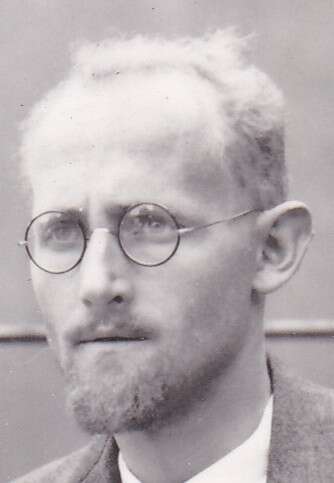
Photo: Historical Archives of Seventh-day Adventists in Europe
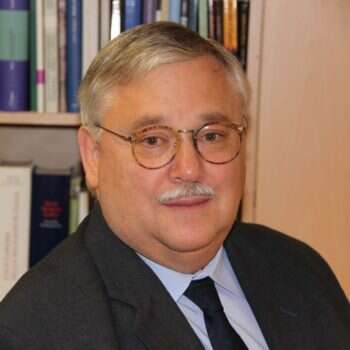
Photo: FAU | Andrea Cramer


