Famous Friedensau academics and researchers: Karl Rose (1896–1976)
24. Mar. 2026 / Science & Research
Who was Karl Rose? – A difficult question that might be suitable as a quiz question for connoisseurs of European Adventist history. While Rose seems to have been forgotten in Adventist circles, his reputation as the spiritus rector of Eastern Church Studies in Berlin is still alive in the academic world today. There is a reason for this. Rose – the unknown acquaintance, the forgotten and yet important man who hid his Adventist origins in order to find acceptance and recognition in another church. His life story still challenges us today. In this and the next issues of "Our Friedensau", we want to introduce Friedensau graduates who have achieved significance far beyond the boundaries of the Adventist Church due to their later academic achievements.
Where is Karl Rose to be found?
Karl Rose came from Latvia. The German-born family joined the Seventh-day Adventists in 1909. The young Rose was enthusiastic about the Adventists' biblical faith and evangelistic zeal against the backdrop of the imminent return of Christ, which they expected. In 1912, the Free Church leadership in Riga sent him to Hamburg. Rose was to learn the profession of typesetter in the up-and-coming Adventist publishing house ("International Tract Society"). There he also came into contact with numerous preachers who shaped his path of faith. Rose then attended the missionary seminary in Friedensau (1914–1916), where his outstanding academic achievements impressed the teachers. In 1917, he began working as a preacher in Leipzig and Dresden. His marriage and the birth of his daughter took place during this time. Rose returned to Latvia in 1922, where he continued his ministry as a preacher. The leadership of the Free Church soon recognized the young preacher's many talents and granted him a "sabbatical year" in 1924 – a special distinction at the time. He spent this year at Newbold College in England in order to learn not only English, but also the original biblical languages of Hebrew and Greek.
After Newbold College to the University of Riga
After his return, he began studying theology at the University of Riga alongside his pastoral work and graduated with a degree in theology. The adoption of a biblical-critical hermeneutic – the historical-critical method – which was taught at the Protestant theological faculty, seems to have influenced his Adventist faith. But the congregations hardly noticed his inner doubts. In 1929, Karl Rose was appointed head Bible teacher and principal of the Adventist seminary in Suschenhof (Suži) near Riga. His service and knowledge were highly valued, but in 1937 he broke away from the free church. The exact reasons that led to his resignation are no longer known. His withdrawal was a great loss for the Latvian Adventists. The Protestant church, to which Rose turned, welcomed him with open arms, offering him more opportunities for professional development than the small free church would ever have been able to.
To academic heights after the Second World War in Germany (GDR)
After Rose fled to Germany at the outbreak of the Second World War, he slowly began to climb the ecclesiastical and academic career ladder. Nobody in Germany knew about his Adventist past in Latvia, which he deliberately concealed. Initially, he worked as a consultant for the then Berlin Church Chancellery. After the end of the war, Bishop Otto Dibelius appointed him as a liaison officer to the Soviet military administration in Karlshorst. Rose was considered a proven expert on Russian history and Orthodoxy and spoke Russian at a native level. His diplomatic connections in the Soviet Union, which he also used for persecuted Russian-German Lutherans, reveal his role as an "ecumenist" and bridge-builder. In 1952, Karl Rose received a lectureship in Eastern Church Studies at Berlin's Humboldt University. Three years later, he was appointed head of the newly founded "Institute for Eastern and South Slavic Religious and Church Studies" in the presence of the Deputy Prime Minister of the GDR, Otto Nuschke. In 1958, Rose was then appointed professor without a doctorate (!). It was only after his retirement (1961) that Humboldt University awarded him an honorary doctorate in theology on the occasion of his 70th birthday (1966). Rose became well-known and famous in academic circles for his magnum opus: "Grund und Quellort des russischen Geisteslebens. From Scythia to Kievan Rus" (1956). In this profound work, he examines the genesis of the early Russian historical consciousness that led to the formation of the Russian nation.
What remains?
Karl Rose was an Adventist, Friedensau graduate, Lutheran, ecumenist and professor of Eastern Church Studies - a multifaceted, complex life story. In retrospect, Friedensau Adventist University honors his academic merits. Personal decisions of faith, on the other hand, elude academic evaluation and remain a decision of conscience that must be respected. However, an open confession facilitates a common Christian witness.
Daniel Heinz, Ph.D.
From 1997 to 2023 Director of the Historical Archives of the SDA in Europe in Friedensau
Literature: Daniel Heinz (author), Karl Rose: Experiencing, suffering and exploring confessional diversity. Wege zur Verständigung zwischen Protestantismus und Orthodoxie, in: Perspektiven der Ostkirchenkunde II, ed. by Martin Illert and Andriy Mykhaleyko, Paderborn 2026, pp. 13–24.
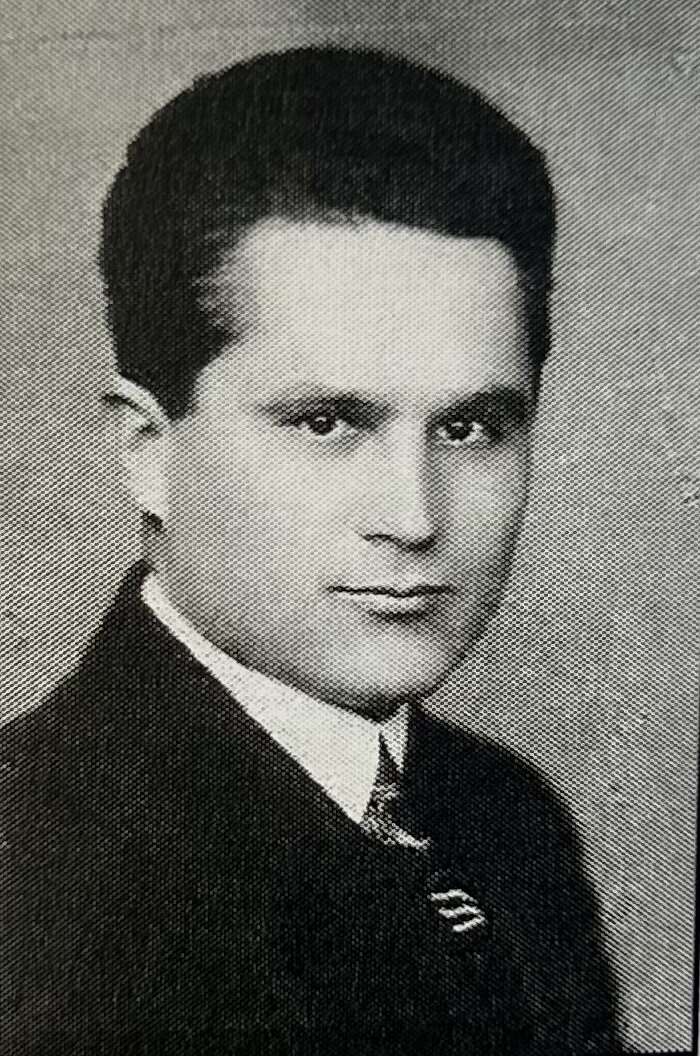
Photo: Historical Archives of SDA in Europe


