Missionizing on the dance floor – a look back at the 1970s
24. Mar. 2026 / Learning & Studying
In the past, Friedensau, which is surrounded by forest on all sides, often proved to be a place of seclusion from everything that was happening in the vibrant society "out there". And yet the developments in society made themselves felt - albeit with a time lag. The following report provides an exciting insight into the early 1970s. In the religious field, it was above all the "Jesus People Movement" that exerted a considerable influence on young people, even in the former GDR, and did not even stop at Friedensau.
New principal in Friedensau
The external framework seemed favourable, especially as a new, dynamic principal, Felix Schönfeld, had been appointed to Friedensau in 1968, replacing Dr. Siegfried Lüpke. He embodied the "old school", had already left his mark as a teacher in Friedensau during the Weimar Republic and had been appointed principal in 1954. Fourteen years later, it was time for change.
The following report by our alumnus Hartmut Schütze, which takes the reader back to the early 1970s, should be understood in the context of this tension between the search for new paths and the preservation of the old, especially with regard to boarding school life:
As a young man at the preacher's seminary in Friedensau
"In the summer of 1971, 12 months of seminary lie behind me. I am like a plant whose roots are drowning in the waterlogged flowerpot. I watered it every day. There is no drainage. This damages the plant. And yet, just 13 kilometers away from our pious world in the district town of Burg, young people are waiting for alternatives to the questions of meaning and life taught to them by an atheistic state.
One Friday afternoon, I read on a poster about dance events every Saturday evening in the youth clubhouse in Burg. And suddenly I know that this is it. Jesus gives me the certainty – go there and talk to the young people about me. I look for comrades-in-arms among the Bible students and find them in Andreas and Jörg. We ride our bikes to Burg late in the evening in the fall of 1972. Secretly, because the house rules stipulate a strict night's rest from 10 p.m. and are controlled by a teacher we jokingly call Brother "Lichtaus".
Cycling through the forest to Burg
After a prayer meeting and a request for guidance from the Holy Spirit, we get on our bikes and cycle the 14 km through the forest to Burg. About 45 minutes later, we park our bikes near the youth clubhouse. We pay the entrance fee of 2 or 3 GDR marks. We pass the doormen and enter the building. Cigarette smoke is cut through by loud booming beats that show us the way to the stairwell on the first floor. Every step is filled with young people. Cigarettes in the corner of their mouths and bottles of beer in their hands. They try to shout loudly against the music. Entertainment is out of the question. We make our way to the hall on the upper floor. Long beer tables line the walls around the dance floor. On them are beer bottles and ashtrays filled with cigarette butts.
Silent prayer at the beginning
"Jesus, how can we communicate in this crowded room? Show me young people I can talk to!" – I pray quietly. And suddenly I'm standing in front of a guy with long, curly hair flowing down to his shoulders. He has a full beard, a tattered brown leather jacket and jeans. Anything but the image of a typical GDR youth. Suddenly I hear a quiet voice inside me: Tell him about me. Ask him if he knows me, or if he's ever heard of the Jesus People movement.
The introduction works. The guy reacts easily. He wants to hear more about Jesus. A short time later, he brings a few more guys with him into the passageway between the stairwell and the dance hall. I tell them about myself, about my studies at the preacher's seminary and that I'm here with other students to tell young people about Jesus and read the Bible with them. We arrange to meet again next Saturday evening.
A week later ...
The following week we are standing at the edge of the hall again talking about Jesus. Wolfgang is also there. He has brought a few friends with him. We already have an introduction and read the first chapter of the Gospel of John. This also reminds us of a missionary method in the Jesus People movement, which works according to the song "Two Hands": "Use your own two hands. Reach for Jesus with one, bring a friend with the other!"
Through their ministry, the behavior of young people is changing
In the evening, we are approached by the organizer shortly before leaving the house. He wants to know what we are talking about with the people. He says that there are fights between the young people in the hall every week. He always has to call the police to mediate. But now, for the second week, he has had no arguments, no fights and no police. He puts it down to our presence and conversations. We tell people who we are. We talk to people about Jesus and our Christian faith. He looks at us thoughtfully for a while. Suddenly he offers us a deal. We can continue to talk about Jesus in the hall if we do the stewarding for him. We get free entry, a steward's armband around our upper arm and a small amount of money for our service.
We go for it. Our conversations with the young people become bigger and more intense. Soon we are sitting at the large beer tables, reading the Bible together and talking very personally about Jesus. One girl wants to test Jesus to see if he can make her free from smoking. We pray together for her request. The following week she says that our Jesus really helps. We realize that we need another opportunity for in-depth conversations in our group.
How can we connect with the local Adventist church?
We make contact with the local Adventist church. We tell them about our experiences in the youth clubhouse in Burg and ask if we can meet for Bible studies in the church rooms. This amazes the congregation. We learn that the congregation only consists of a few older members. But they have invited Helmut Saß, a SDA youth preacher, to a youth evangelization. He accepted. Since then, they have been praying that God will bring young people into the church. Because they don't know how and where they can invite the youth, but God can do it. That's what they believe. And now we come with our young people and ask to be let in. Together we marvel at God's greatness and his miraculous work and thank him for it."
Hartmut Schütze studied theology in Friedensau from 1970 to 1974 and lives in Tettnang with his wife Petra
Editor's note: This report has been shortened (the full text can be found on our blog page: thh-friedensau.de/blog). It takes a look at some of the missionary activities in the former GDR in the 1970s. How did you experience missionary work in your church today or in the past? What experiences would you like to pass on? If you would like to, please write to us. The editorial team of "Unser Friedensau" is looking forward to your reports: .
Dr. Johannes Hartlapp
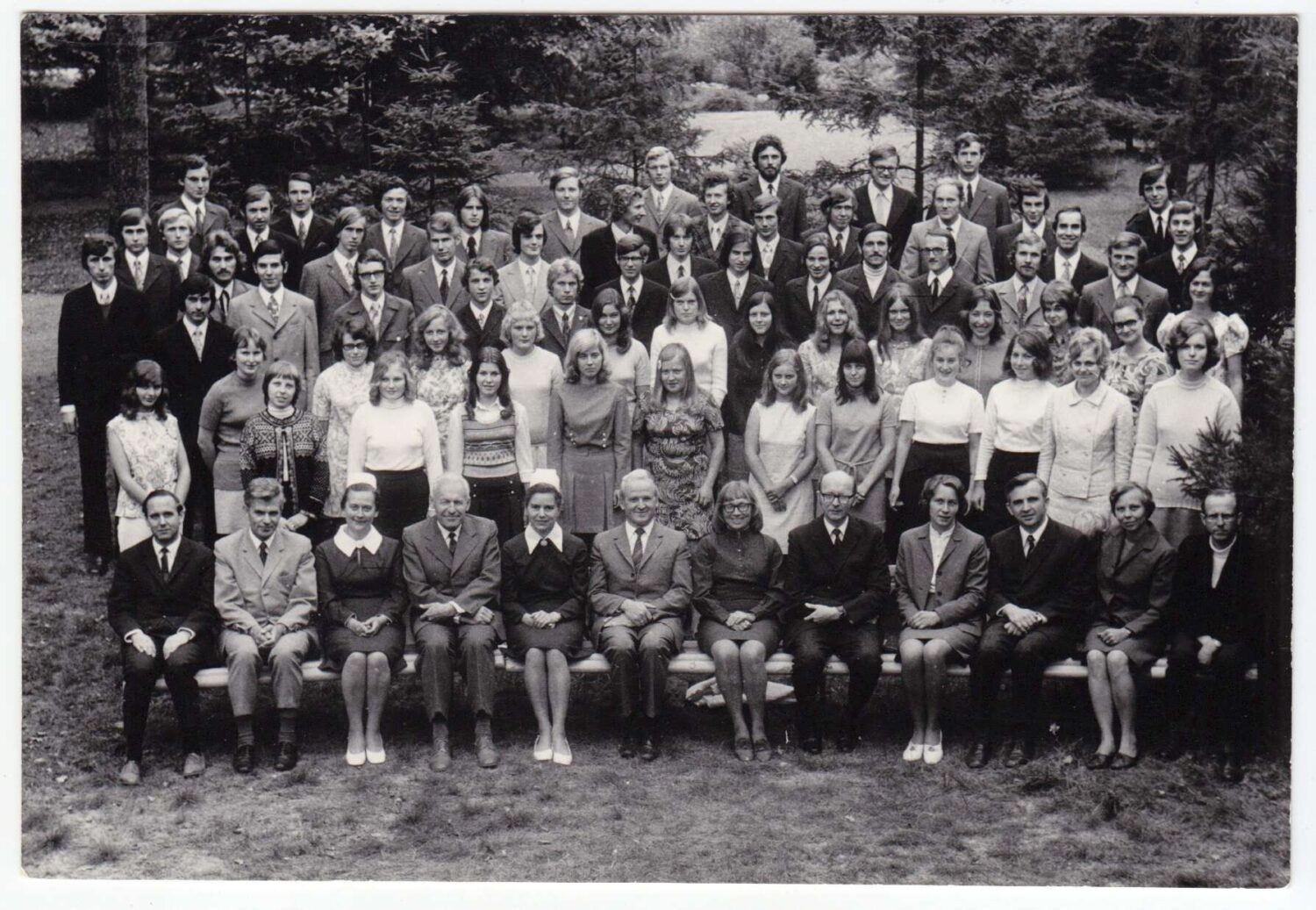
Photo: Historical Archives of SDA in Europa


