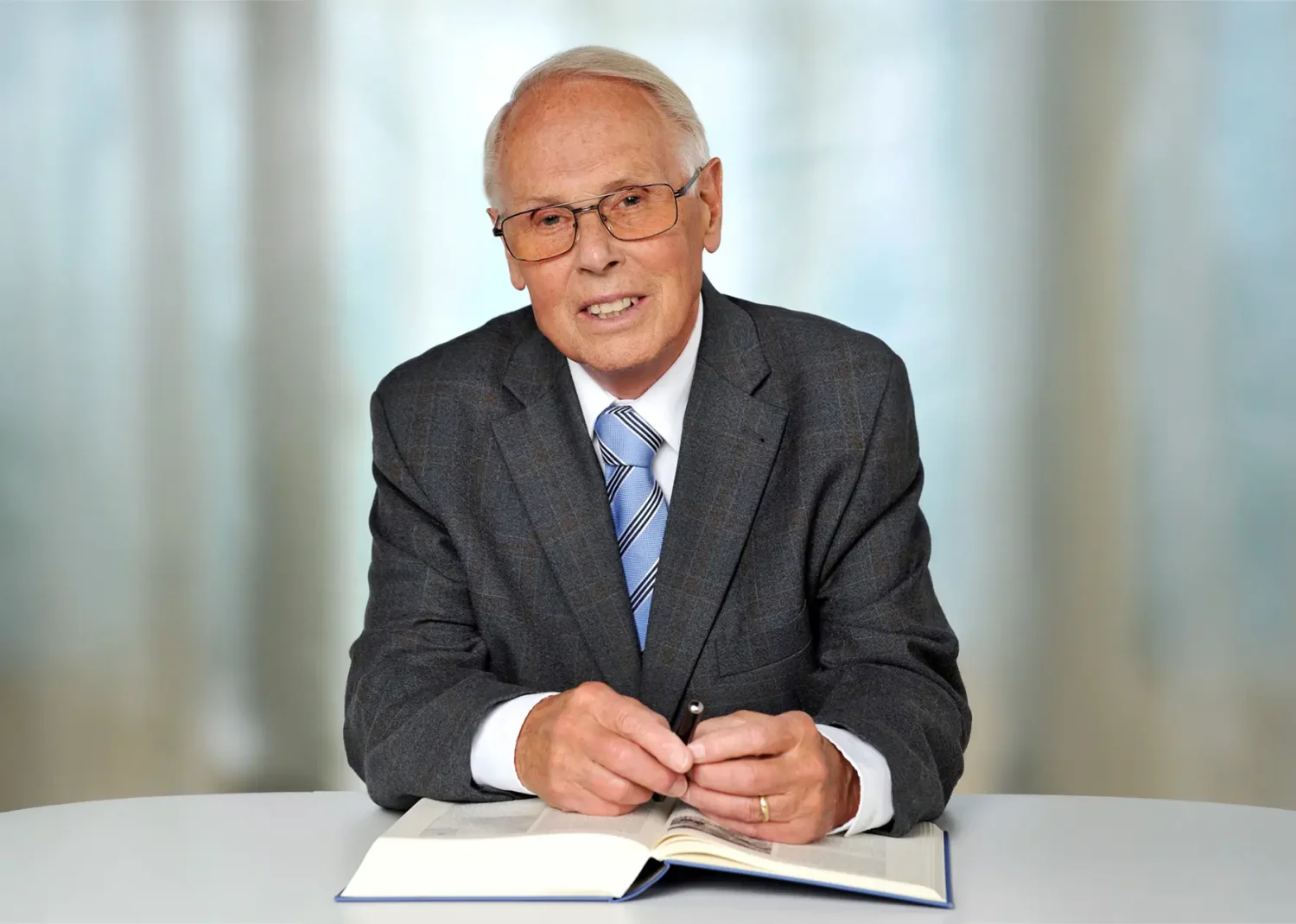
Prof. Dr. Dr. Siegbert Uhlig (born 1939)
08. Jul. 2026 / Science & Research
Successful Friedensau Academics and Researchers
Siegbert Uhlig is still well known to the Friedensau community and Adventists in central and northern Germany—as a graduate of the Preacher’s Seminary and as an Adventist pastor in Mecklenburg, Berlin, and Saxony-Anhalt. In 1990, when the Friedensau Ministerial Seminary received state recognition as a privately funded theological university, he made himself available as a university professor, taught as a visiting lecturer, and helped strengthen the academic profile of the young institution. But the path to becoming a university professor and an expert on Ethiopian studies was a rocky one.
Early Years
Siegbert Uhlig’s parents, Wilhelm and Johanna (née Gießler), were devoted Adventists who had received their education in Friedensau. Originally from Saxony, his father was called to East Prussia as a young pastor. Siegbert was born there in Königsberg in 1939, shortly before the outbreak of World War II, as was his younger brother Horst (1941). As the front line drew ne , the young family made its way via various evacuation sites to their grandparents’ home in Wickershain (Saxony). His father returned from captivity as a prisoner of war and was called to Dresden to serve as a department head for the Union. In 1954, Siegbert joined the Adventist Church through baptism at the “Sonnenhof” near Dresden. He first trained in a trade, as the authorities denied him a higher education because his father was a pastor. Following his father’s example, Uhlig entered the Friedensau Theological Seminary in 1957 and completed his studies in 1961. In 1962, he married Waltraud Lippert, whom he had met in the Halle Adventist Youth group and who supported him for decades in his scholarly work and prepared his publications for print. The couple had two sons: Hilmar (1963) and Sven (1966), who, like their father, pursued academic careers.
1961 marked the beginning of formative years as a pastor of the Adventist Church in Rostock, Schwerin, Greifswald, East Berlin, and Magdeburg. But his drive to conduct research remained. Alongside his pastoral work, Siegbert Uhlig studied Protestant theology and earned his doctorate (Dr. theol.) from the University of Rostock in 1969.
From East to West: New Educational Paths and Perspectives
When the opportunity arose to pursue a habilitation in New Testament studies at the University of Halle/Saale, he took advantage of the authorities’ approval for a research stay of several weeks at the Faculty of Protestant Theology in Zurich to conduct his scholarly research and to establish important contacts with Swiss universities. Professor Markus Barth of Basel, son of the eminent Swiss theologian Karl Barth, was interested in Uhlig’s habilitation thesis on Old Testament references in the Book of Revelation and pro forma offered him a position at the University of Basel. This invitation significantly facilitated his departure from the GDR, though it did not come with a job or income. Uhlig’s application to leave the country in 1976 caused quite a stir. The Free Church leadership categorically ruled out rehiring Uhlig in the West; no one from the circle of pastors was to be encouraged to “leave” the GDR. In 1977, Siegbert Uhlig left the GDR with his family, heading into a future with no clear prospects. But a new world opened up for him in academia.
Academic Challenges and Achievements
The studies and research that followed focused more heavily on the core areas of Oriental studies. The preliminary topic for his habilitation thesis addressed the relationship between the judgment text in Revelation 20 and structurally similar texts in Jewish apocalyptic literature, such as those found in the Syriac Book of Baruch, the Fourth Book of Ezra, and the Ethiopian Book of Enoch. Since Uhlig lacked the essential knowledge of Old Ethiopian, he first had to learn the language under Professor Ernst Hammerschmidt at the University of Hamburg. Hammerschmidt was known to Adventists for his study on “The Status and Significance of the Sabbath in Ethiopia” (1963). Uhlig now began to immerse himself in Ethiopian studies. A new career path opened up, but there were still difficult years of study ahead, during which the family had to get by temporarily on a modest scholarship. In 1980, Uhlig earned his second doctorate, this time in Semitic Studies (with a focus on Ethiopian Studies), with a dissertation on “Ludolf’s Theologia Aethiopica.” The Erfurt polymath Ludolf (1624–1704) is considered the founder of Ethiopian studies. Uhlig abandoned his original habilitation topic (Revelation 20 in the * * as a Mirror of Jewish Apocalypticism) and devoted himself entirely to the new field of Ethiopian studies. In 1985, he earned his habilitation with a dissertation on Ethiopian paleography (Investigations into the Age of Old Ethiopian Manuscripts). Research projects, research trips, and publications defined the following years. In 1990, Uhlig was appointed to the Chair of African Languages and Culture at the University of Hamburg as the successor to Professor Hammerschmidt. The scientific direction and publication of the international *Encyclopaedia Aethiopica* are considered the crowning achievement of his life’s work; Uhlig worked on this project for nearly 20 years with approximately 600 authors from about 40 countries, resulting in five volumes containing over 4,300 articles. With this scholarly encyclopedia, Uhlig gave Ethiopian studies a clearly defined profile and earned lasting recognition in the academic world.
The circle is complete
This brings the circle of a researcher’s life full circle—from pastor of the Free Church to professor, from theologian to specialist on Ethiopia. And where do the roots of Uhlig’s interest in African culture lie? What appears to be a chance “passion for research” actually began in childhood. The elderly Friedensau East African missionary Robert Lusky (1878–1961)—a true character with his pith helmet—shared his experiences with the Dresden Adventist congregations, and the young Siegbert listened spellbound to his stories. Siegbert Uhlig has reoriented Ethiopian studies and, in doing so, broadened its scope. In 2002, he founded the Research Center for Ethiopian Studies at the University of Hamburg, now known as the Hiob-Ludolf Center for Ethiopian Studies. On his 60th birthday, he established the German-Ethiopian Foundation, which primarily supports young Ethiopian scholars. Uhlig has received various academic honors, including one from the British Academy. To this day, Siegbert Uhlig continues to preach in Adventist worship services, often drawing on Old Testament texts, enriching them with his knowledge of the Orient and Africa, and exploring their relevance for the present. The Word of God has been and remains the anchor of his life.
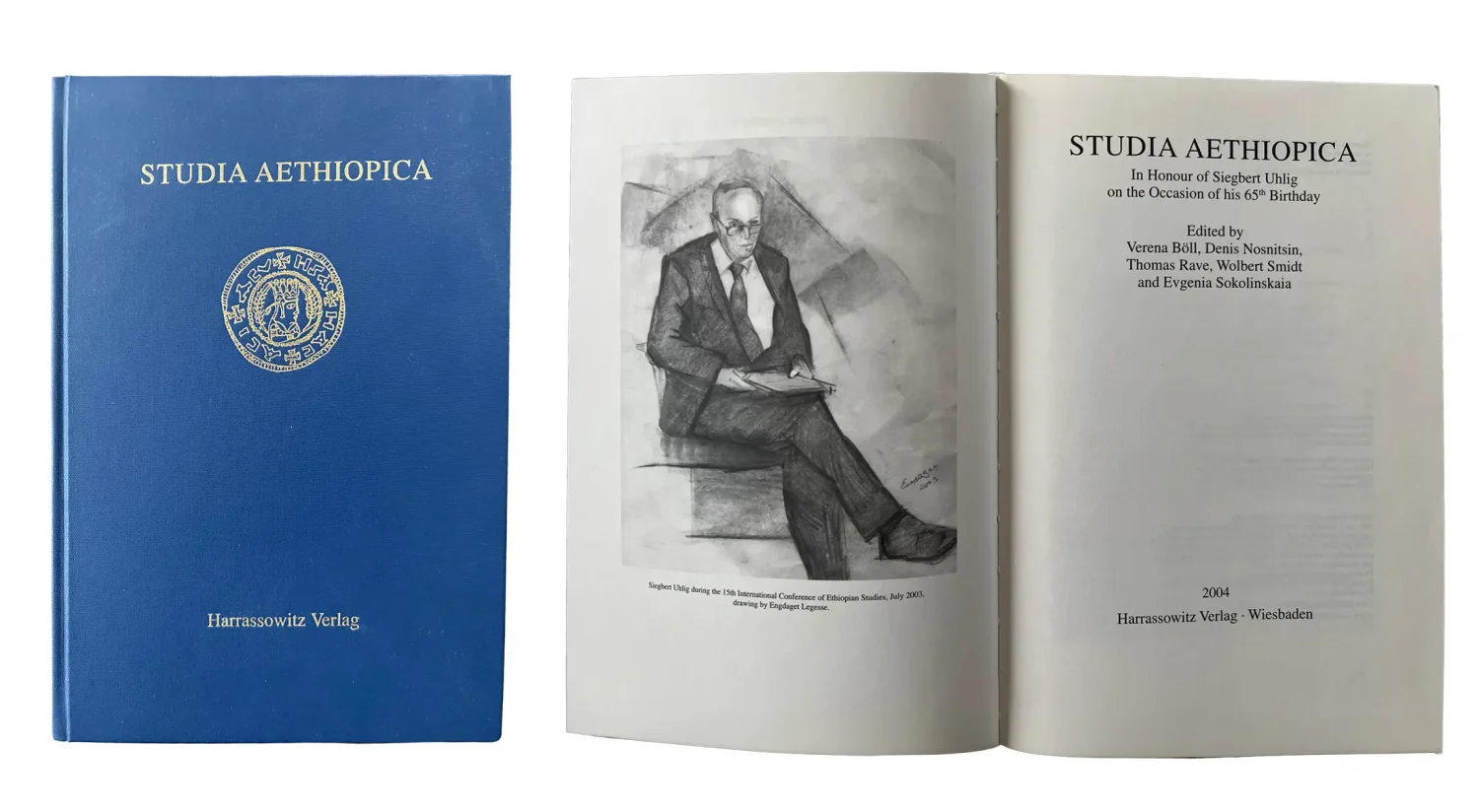
Bibliography: Verena Böll et al., *Studia Aethiopica. In Honor of Siegbert Uhlig on the Occasion of His65thBirthday*, Wiesbaden 2004 (commemorative volume).
Daniel Heinz, Ph.D.