The silent work of the Friedensau sisters
24. Mar. 2026 / Science & Research
The diaconal ministry of Adventist women is rarely in the spotlight today. This is not surprising, as the organization of social welfare is largely regarded as a state monopoly. In retrospect, however, welfare was an identity-forming feature of the German Adventist movement, especially in the 1920s and 1930s. Despite the lively expectation of the imminent return of Jesus, people did not fatalistically console themselves over the human tragedies of this challenging interwar period by pointing to the imminent redemption, but actively took up the service of their fellow human beings. I would like to use the short life story of my grandmother Magdalene as an example to shed light on the structures of Adventist welfare work.
Initially a nurse in public health care
In 1916, my grandmother Magdalene Schwital (born in 1901) joined the Adventist Church in Gdansk. She completed an apprenticeship as a nurse at the Virchow Hospital in Berlin, married Erich Tulaszewski in 1926 (employed by the community in Berlin since 1925 as an accountant and treasurer) and thus gave up her position as a community official in the city of Berlin. As part of the reorganization of the Adventist Welfare Organization (AWW) at the beginning of 1928, she asked Brother Heinrich Franz Schuberth (Central European Division Head 1928–1933, among others) to set up the social welfare department in Berlin-Wilmersdorf especially for pregnant women and young mothers ('Mother and Child'). However, this "fruitful" work was interrupted in the same year by her husband's transfer, first to Görlitz and then to Breslau at the end of 1928. In Wroclaw, she built on the structures of the local Tabea associations[1] and founded 28 groups, all of which were affiliated with the local welfare and welfare offices (i.e. state-run). She herself, together with head nurse Catharina Thiemsen - who belonged to the Friedensau Sisterhood, which had its own house in Breslau – was appointed welfare nurse by the Breslau magistrate in July 1933.
The influence of Sister Hulda Jost
Sister Hulda Jost's significant influence on these energetic years should not go unmentioned – despite her controversial nature during the Nazi era. Ideological blinkers did not play a significant role in her work. On the contrary. Magdalene emphasizes the "friendly relations" with the Polish work. This was not entirely unexpected, as her brother-in-law Wilhelm Czembor (married to her sister Ruth) worked as a preacher for the Polish congregations and served as the head/president of the Adventist Church in Poland from 1936 to 1945. At the end of 1935, the Tulaszewski couple was transferred again.
As supervisors at the Olympic Games in Berlin
The path now led to Königsberg. Here Magdalene also tried to build up structures under the umbrella of the V. (Fifth) Welfare Association together with Sister Glass. For the 1936 Olympic Games, she briefly returned to Berlin as a coach for the French fencers. However, from 1937/38 onwards, the pressure on the welfare associations to conform had become so great that the official work ended and they were limited to providing assistance within the community and the circle of friends (as the war progressed, this included help for refugees and bomb victims). Magdalene herself had been active in the medical service since the beginning of the war.
Her escape from Königsberg in 1945 – and a cautious new start
Accompanying a transport of wounded soldiers in March 1945 enabled her and her two youngest children, Ursula and Eckehard, to escape across the Baltic Sea to Denmark. There they found shelter with relatives in Aarhus. Once again, family ties played a role. Her brother-in-law Karl Friedrich Tulaszewski (sent out from Friedensau in 1922 as a missionary to Hungary, Persia, Brazil and Argentina, among other places) was married to Marie Simonsen from Denmark, whose family offered her and the children shelter for the next year and a half. This spared them an internment camp for the time being, and Magdalene began to work in the so-called Dorcas work[2] in Aarhus. In December 1946, they were temporarily sent to the Oksbøl refugee camp and in June 1947, they moved to the French occupation zone in Frankfurt am Main. There she was immediately employed as a Unification Sister in the Middle Rhine Association and was - after the release of the Marienhöhe by the US authorities – designated as a so-called preceptor (or teacher). Meanwhile, her husband Erich had obtained a position in the Märkische Vereinigung in Cottbus. At Brother Budnick's request, they made the "serious" decision to settle in the Soviet occupation zone in 1948.
Care and dedication – a life motto
Due to legal regulations, it was not possible to work in the community here. Magdalene worked with the DRK and the Volkssolidarität. Over the next few years, she focused on accompanying children's transports and caring for prisoners. She died in Cottbus in 1983 and is buried in the cemetery in Friedensau.
Martin Tulaszewski, M.A. in religious studies, works as a return counselor at the immigration office of the District Office of North Saxony
[1] Tabea or Tabita associations: Founded in German-speaking countries around 1900 as Tabea associations or groups; the name was based on Tabea of Joppa, who is described as a charitable disciple in Acts 9:36-42. There were Tabita associations in the Polish association of the 1930s.
[2] Dorca work: founded in 1874 in Battle Creek by women to support church members; Dorca as a Greek translation of the Aramaic name Tabita; expansion of the field of work to include general charitable purposes outside the Adventist Church; probably a forerunner organization of today's ACS (Adventist Community Services) in the USA and possibly also ADRA (Adventist Development and Relief Agency) as a development aid organization outside the USA.
Photos: 1 Erich und Magdalene Tulaszewski | all Photos: private | Martin Tulaszewski
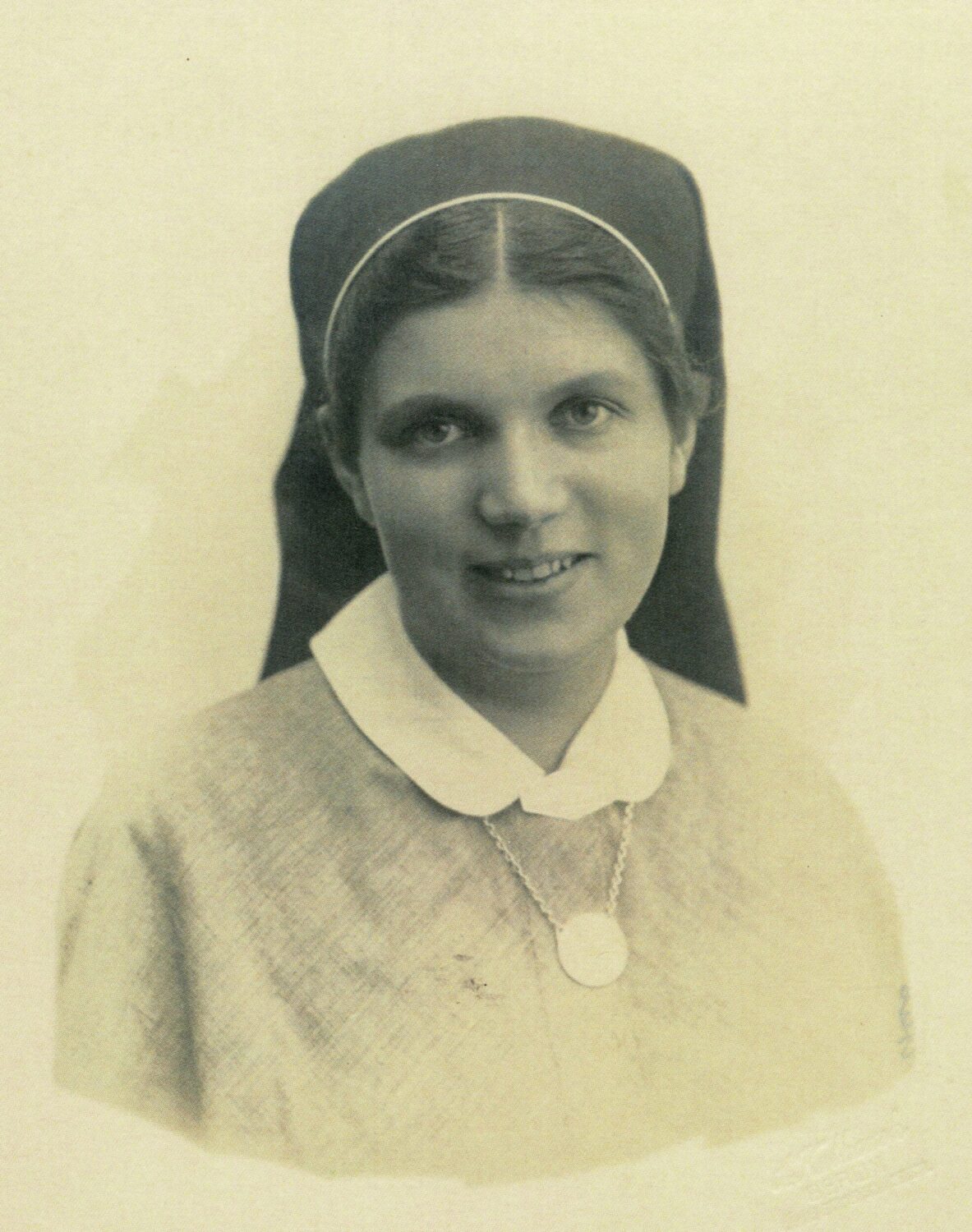
Photo: private


